
Silver Plate vs Sheffield Plate: 5 Ways to Tell the Difference

Silver plate and Sheffield plate may look almost identical at first glance. Both have a silver surface over another metal, and both can reveal a different colour where that surface has worn away. However, they were made using fundamentally different processes.
Old Sheffield Plate was produced by fusing silver to copper before forming the material into an object. For a broader introduction to plated wares, see what silver plated means. Most later silver-plated wares were made by depositing a thin layer of silver onto a finished base-metal object through electroplating. To tell them apart, you need to examine the construction, seams, edges, wear, marks, and probable age together.
Silver Plate and Sheffield Plate Are Not the Same Thing

Collectors commonly use silver plate to describe electroplated tableware. Its base may be nickel silver, brass, Britannia metal, or another alloy, covered with a relatively thin deposit of silver.
Old Sheffield Plate is a specific fused material developed in Sheffield, England, during the 18th century. Thomas Boulsover is credited with discovering the process around 1743. A sheet of silver was fused to copper and then rolled, shaped, and fabricated into objects such as trays, candlesticks, tureens, and wine coolers. Later material was sometimes silvered on both sides of the copper core.
Commercial electroplating arrived roughly a century later. Elkington & Co. became closely associated with the development and commercial use of silver electroplating in Britain during the 1840s. The new process was more economical and gradually displaced fused Sheffield plate. The underlying method is outlined in the neutral electroplating reference.
Quick Comparison: Sheffie

ld Plate vs Electroplated Silver

| Clue | Old Sheffield Plate | Electroplated Silver |
|---|---|---|
| Construction | Silver fused to a copper sheet before fabrication | Silver electrically deposited onto a formed base-metal object |
| Typical period | Mainly mid-18th to mid-19th century | Commercially widespread from the 1840s onward |
| Metal beneath wear | Usually warm reddish copper | May be nickel silver, brass, copper, or another alloy |
| Edges and seams | May show folded edges, applied silver wire, silver-filled borders, or construction seams | Usually lacks the characteristic fused-sheet edge construction |
| Marks | Maker's marks, symbols, pseudo-hallmarks, or no mark | Often marked EPNS, EPBM, electroplate, or with a manufacturer's name |
How to Tell the Difference Step by Step

1. Inspect worn high points
Begin with areas that receive the most handling: raised decoration, rims, handles, feet, hinges, and the centres of trays. A reddish or salmon-coloured metal beneath the silver is consistent with the copper core of Sheffield plate.
Grey-white metal may indicate nickel silver, while a yellow tone can suggest brass. These colours often point toward electroplate, although copper was also used as an electroplating base. Copper exposure is therefore an important clue, not proof by itself.
2. Examine rims and borders
Because Sheffield plate was formed from fused sheet, makers had to conceal or protect exposed copper at cut edges. Look closely for a folded edge, a separate strip of silver, or applied silver wire around a rim. Some borders were filled or reinforced with silver so that wear would not immediately reveal copper.
These construction details are particularly useful on trays, salvers, dishes, and vessel rims. Use a magnifying glass and inspect both the upper and lower surfaces.
3. Look for construction seams
Old Sheffield Plate objects may show seams where pieces of fused material were joined. A seam can sometimes be found along a body, beneath a rim, or near an attached component. Electroplated wares can also have soldered joints, so consider the seam's position and surrounding edge construction rather than treating any seam as decisive.
4. Check handles, feet, and fittings
Handles, feet, finials, and mounts may have been made separately and soldered into place. Examine the joints for differences in colour, wear, and material. Mixed construction and old repairs are common, so one fitting may not represent the whole object.
5. Read every mark
Photograph all stamps in clear, angled light. Marks can provide a maker, material, or approximate date, but they must be interpreted carefully.
Marks That Point to Electroplated Silver
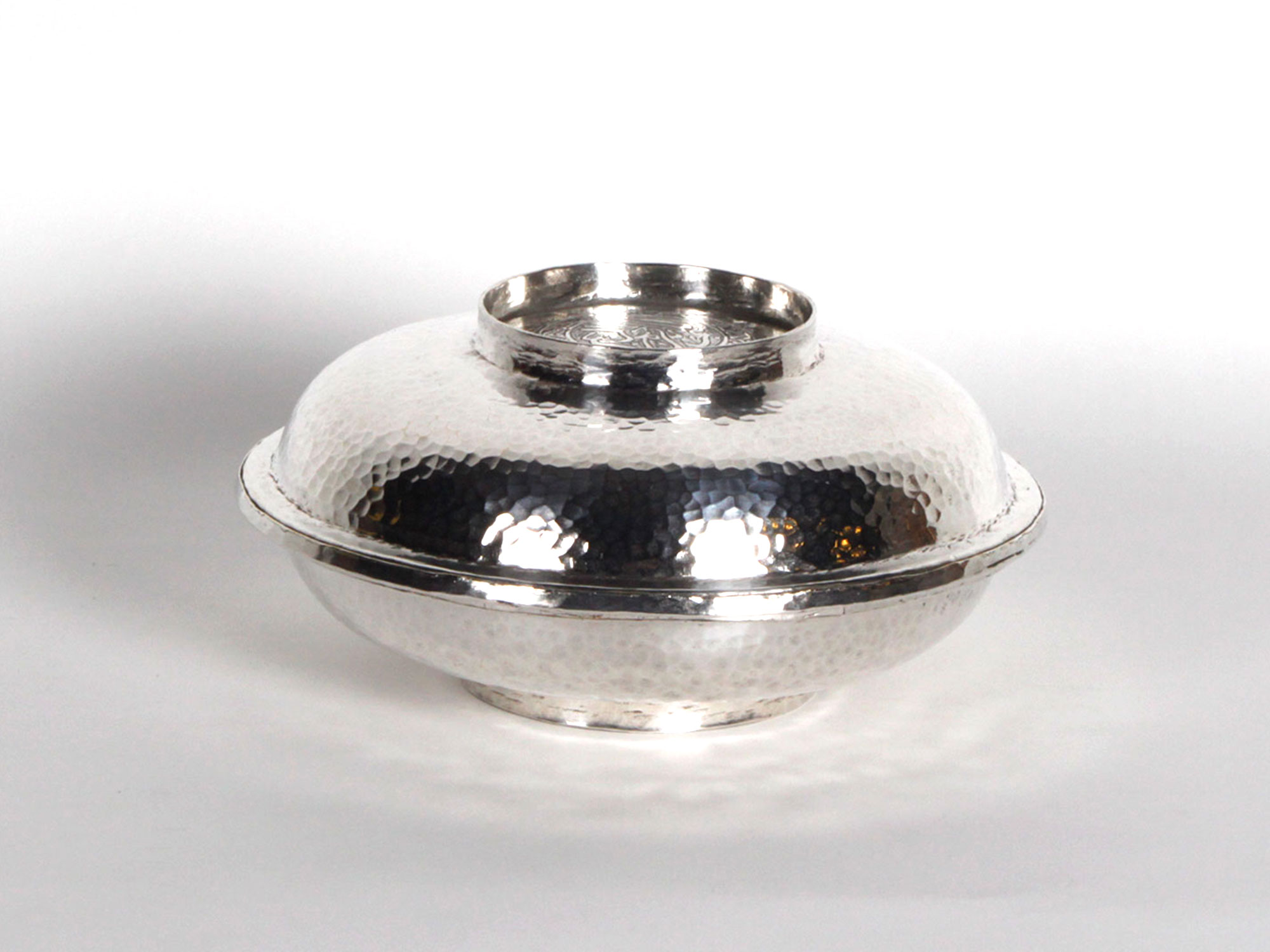
EPNS means electroplated nickel silver. Nickel silver is a copper-based alloy containing nickel and usually zinc; despite its name, it contains no silver unless plated. EPBM means electroplated Britannia metal, generally a tin-based alloy.
Other useful terms include “electroplate,” “silver plated,” and manufacturers' names associated with plated wares. Numbers may describe a pattern, model, production system, or plating grade, but they should not automatically be interpreted as silver purity.
Electroplate stamps are not the same as a complete British sterling hallmark. A genuine British hallmark is an official set of marks that can identify the standard, assay office, date, and sponsor or maker. Our guide to reading English sterling silver marks explains those elements in more detail. A row of attractive symbols alone does not establish that an item is solid silver.
Marks and Dating Clues on Sheffield Plate
Old Sheffield Plate may carry a maker's mark, a device, or pseudo-hallmarks designed to resemble the visual language of silver marks. Some pieces are unmarked. Pseudo-hallmarks should never be treated as proof of sterling silver.
Age can narrow the possibilities. Fused Sheffield plate belongs chiefly to the period from the mid-1700s to the mid-1800s. Electroplate became commercially important from the 1840s and remains in use. However, an old appearance does not make an object Sheffield plate, and an electroplated item can certainly be antique.
There is also an important naming trap: electroplated ware made in Sheffield is not automatically Sheffield plate. “Old Sheffield Plate” describes the fused silver-and-copper material, not simply the city where an object was manufactured.
Wear Patterns Are Clues, Not Proof
Authentic wear develops naturally on exposed surfaces and areas repeatedly touched or polished. Broad reddish patches on high points can support a Sheffield plate identification, but electroplated copper can produce a similar appearance.
Repairs and restorations in antiques, including replating, may hide original wear, seams, and borders. Repairs can add unfamiliar solder, replacement parts, or sections of different metal. Heavy polishing can remove silver and blur marks. For these reasons, the strongest identification combines several clues: copper wear, fused-sheet construction, characteristic edges, appropriate marks, and a plausible date.
Common Identification Mistakes
- Assuming exposed copper proves Sheffield plate: Electroplated objects can also have copper bases or intermediate copper layers.
- Confusing place with process: An EPNS object made in Sheffield remains electroplate.
- Reading pseudo-hallmarks as sterling marks: Similar-looking symbols may be unofficial maker or trade marks.
- Judging by weight or colour alone: Construction, repairs, tarnish, and replating can all mislead.
- Assuming every unmarked object is early: Missing marks do not establish age or manufacturing method.
A Safe At-Home Identification Checklist
- Photograph the whole object and every mark.
- Inspect worn high points and record the colour beneath the silver.
- Examine rims for folded edges, applied silver wire, and protected borders.
- Look for seams and soldered joints around bodies, handles, feet, and mounts.
- Check whether marks such as EPNS or EPBM identify electroplate.
- Compare the design and maker with reliable reference sources.
- Seek a specialist opinion when the evidence is mixed or the object may be valuable.
Do not file, scrape, scratch, or aggressively polish the object to expose its base metal. If the piece needs routine maintenance, follow conservative guidance for caring for antique silverware. Avoid chemical spot testing unless it is performed by a qualified person who understands plated surfaces. Destructive testing can damage both the finish and the object's value.
Frequently Asked Questions
Is Sheffield plate more valuable than ordinary silver plate?
Old Sheffield Plate is often more collectible because of its age, craftsmanship, and historical manufacturing method. Value still depends on maker, form, condition, rarity, and originality.
Does copper showing through always mean Sheffield plate?
No. It supports the identification, but electroplated objects may also expose copper. Look for additional evidence in the edges, seams, marks, and date.
Can Sheffield plate be marked EPNS?
True Old Sheffield Plate should not be identified as EPNS. An EPNS mark indicates electroplated nickel silver, even when the object was manufactured in Sheffield.
Is Sheffield plate the same as sterling silver?
No. Sheffield plate has silver fused over a copper core. Sterling silver is a solid silver alloy, conventionally 92.5% silver.
How can I identify an unmarked plated piece?
Study its exposed metal, borders, seams, fittings, manufacturing style, and provenance. If those clues remain inconclusive, consult a specialist in antique silver.
Before cleaning, repairing, selling, or valuing a possible Old Sheffield Plate object, document its marks and construction carefully. A knowledgeable antique-silver specialist can confirm details that photographs and surface clues alone may not resolve.


